The Fourteen-Night Sleep Plan Free Assessment →
Six Months to Five Years 13 Clinical Trials · 5 Routes

Your baby is probably already getting enough sleep. Here is how to make sure you do, too.

A 14-night research-led programme that matches your family with the right settling approach—so you can stop second-guessing and start resting.
Find My Matched Approach → Free 3-minute assessment · Instant personalised roadmap
Takes three minutes · Free
No email address required
Six months to five years
Traced to published studies
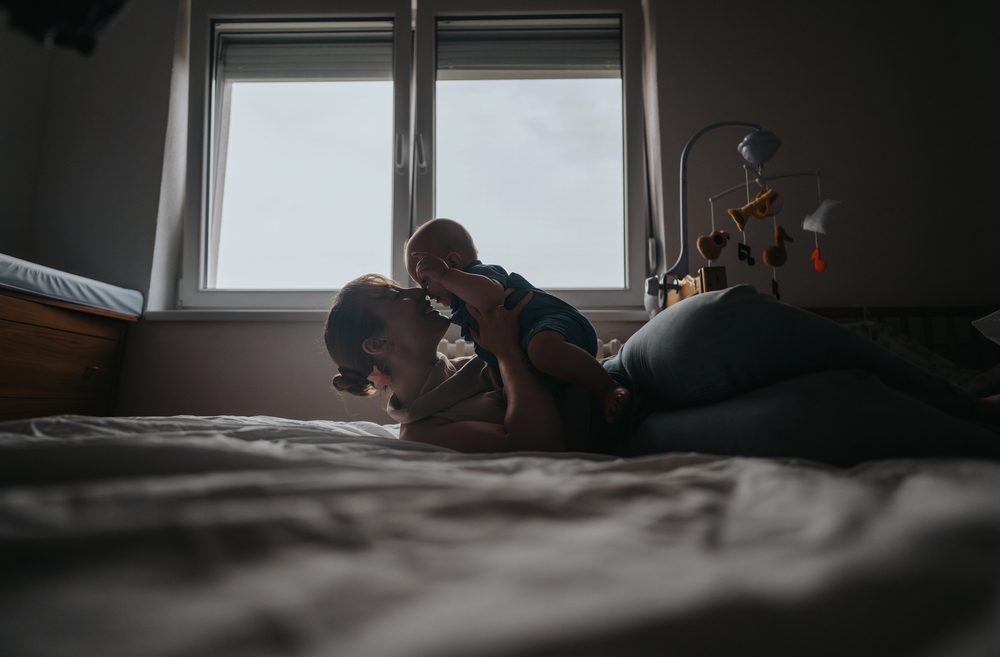
Parent holding sleeping baby near gentle window light
Five Research-Backed Routes
From gentle parent-present to gradual interval checking
THE EXHAUSTION LOOP

Does any of this sound familiar?

If you recognise two or more of these, the six-question assessment will tell you which approach the research points to for your baby.

Bedtime takes far too long

You aren't sure why, what changed, or whether tonight will be yet another two-hour battle.

They wake multiple times a night

And they absolutely cannot get back to sleep without your help—no matter how long it takes.

You’ve “tried everything”

You try a different trick every night, and now you’ve completely lost track of what actually helped.

You’re paralyzed by conflicting advice

You have read six different experts who all contradict each other, leaving you more confused than when you started.

You are running on empty

Your baby might be catching up on sleep during the day, but you are the one surviving on broken sleep and coffee.

You just want a clear plan

You don't want another opinion, a generic blog post, or a philosophy. You just want step-by-step instructions for what to do tonight.

The truth is, your baby is probably getting enough sleep.

A recent study followed 326 children from seven months to six years old. Over that time, their total night-time sleep barely changed. What did change was how often they woke their parents.

You don't need a method to fix your baby. You need a plan to take you out of the wake-ups.

Take the free, 6-question assessment. In 3 minutes, it will tell you exactly which of the 5 research-backed approaches is the right fit for your baby—with no email required.

Find My Best Starting Approach →
WHO BUILT THIS

How this was built

“I have three kids. By the third, I had read enough contradictory sleep advice to last a lifetime. Every book was certain they had the definitive answer, yet none of them could explain why a trick that worked perfectly for my oldest did absolutely nothing for my youngest.”

“So I stopped reading books and went straight to the raw data. I wanted to see the randomized trials and the studies that actually tracked these kids for years.”

“It turns out the actual science is surprisingly straightforward. It also contradicts almost every bestseller out there. There is no single magic method. But there are a handful that actually work, and the data just gives you a map to figure out which one fits your kid.”

13 published studies
Five routes
Caveats included
Sources listed
Read the evidence →
INCLUDED

How it works

Three stages. The first one is free and takes three minutes.

Step 1

Find Your Match

What the problem looks like, how they handle you leaving, and what you are genuinely comfortable doing. Free, no email needed.

Step 2

Routine & Rhythm

Bedtime routine and daily rhythm before any settling method. Four trials, 829 children, and some families never need to go further.

Step 3

The 14 Nights

One screen per night. What to do at bedtime, what to do at each waking, what is normal tonight, and what to do when it goes wrong.

Take the free assessment →
WHY ONE METHOD DOES NOT FIT EVERY BABY

Everything you get

Everything below is included. There is nothing else to buy.

Your matched route

One of five approaches with research behind it, chosen around your child and around you. All five are included, not just yours.

The night-by-night plan

One screen per night, with audio for every night, because at 2am you cannot read.

The troubleshooting library

Teething, illness, travel, regressions, early waking, split nights, short naps, cot to bed, night terrors. Searchable at 3am.

The calculators

Is-this-normal checker, wake windows, nap timing, check-in intervals, bedtime shifting, feed reduction. Worked out for your child's age.

Naps and night feeds

Two full modules, plus the toddler and preschooler track running to five years.

The awkward conversations

A one-page summary you can hand to your partner, one for grandparents, one for daycare, so you are not explaining it six times.

THE HONEST ANSWER

Same method. Different baby.

A trial compared two of the most common approaches directly, in babies aged nine to eighteen months. Both improved sleep overall. But split by how the babies handled separation, something turned up that should be on the front of every sleep programme sold.

Babies who became very distressed when a parent left showed no significant change in how long they were awake at night on the interval-checking method. The same babies improved clearly when a parent stayed in the room instead. The authors concluded that parent-present approaches should be favoured for infants like those.

The five research-backed approaches:

  1. Interval checking — the most studied of the five
  2. Staying in the room — what worked for anxious babies
  3. Shifting bedtime — little or no deliberate crying
  4. No checks — the fastest of the methods compared
  5. Scheduled waking — for a child who wakes at the same time nightly
Find which one fits my baby →
RESEARCH & SAFETY

Is this cruel?

You are going to be asked this, possibly by your own mother. Here is what has actually been measured, with the caveats left in.

Stress Hormones

Infant cortisol tracked over twelve months. It declined and stayed within normal limits. Nobody measured cortisol during the actual nights of crying, so short spikes cannot be ruled out—what the follow-up did not find was any lasting elevation.

Stress hormones · Gradisar et al., Pediatrics, 2016

Attachment & Behaviour

Attachment assessed at twelve months using the standard laboratory measure, scored blind. No significant difference. Behaviour and mental health measured at twelve months and again at six years old, with no difference either time.

Attachment & behaviour · Gradisar 2016; Price 2012

Five Years Later

At six years the researchers also collected salivary cortisol as an objective stress measure, five years after the intervention. 28.8% versus 21.7%, p=0.4. The authors conclude the benefits fade too—no marked long-lasting effects in either direction.

Five years later · Price et al., Pediatrics, 2012
COMPLETE PROGRAMME

Get the complete plan

One payment. No subscription. No equipment to buy. Nothing else to purchase if your route needs to change.

One Payment · Lifetime Access

The Fourteen-Night Sleep Plan

$199
Direct price
The full assessment and your matched route
The five-night foundation phase
Fourteen nights, one screen per night, with audio
All five research-backed approaches, not just yours
Every calculator and the complete troubleshooting library
Naps, night feeds, and the toddler track to 5 years
Full 60-day money-back guarantee
Get the complete plan →
60-day money-back guarantee · Immediate digital access
GOT QUESTIONS?

Questions parents actually ask

The ones that actually get asked.

How is this different from other sleep programmes?
Most programmes sell one method to everyone. We assess your baby's habits and separation anxiety, plus your own comfort level, and match you to one of five research-backed approaches.
Will my baby have to cry?
That depends on the approach you select. Some methods involve crying; others (like parent-present or bedtime shifting) minimise or avoid deliberate crying. The assessment helps you choose what feels right for you.
Can I use this if I am breastfeeding, or still doing night feeds?
Yes. Night feeding and sleep settling are addressed together, with specific guidance for breastfeeding mothers.
Does this replace medical or safe-sleep advice?
No. It is educational and does not diagnose or treat anything. Follow the safe-sleep guidance that applies where you live. Speak to a health professional about any concerns over breathing, reflux, feeding, growth, pain or illness.
What if my baby is under six months?
Take the assessment anyway. You will get our free newborn guide, and we will let you know when your baby is old enough. No settling approach in this programme has been tested below six months, so we do not sell it for that age.
What if my partner and I disagree about this?
That is common, and it matters more than most things—where only one parent is on board, the problem is significantly less likely to resolve. The evidence page is free and public with every citation, so you can both read the same thing rather than argue about whose source is right.
Do I need to buy anything?
No. No particular cot, monitor, sleeping bag or gadget is needed to follow the plan.
What if it does not work?
Complete the five-night foundation and follow your route for at least seven nights. If you have done that and you are not satisfied it helped, email us within sixty days and we will refund you in full.
Find out which research-backed approach fits your baby · 3 min · Free Take the free assessment →